
How to Know When It’s Time to Raise Rates
Raising rental rates can feel uncomfortable, especially when you know your tenants and appreciate their business. You may worry about complaints, move-outs, or making your facility less competitive.
The right timing depends on your facility’s performance, local demand, and current pricing. Before making a change, look for these signs that an increase may make sense.
1. Your Units Are Consistently in Demand
If certain unit sizes stay full, vacancies rent quickly, or you regularly turn away prospective tenants, it may be time to review your pricing.
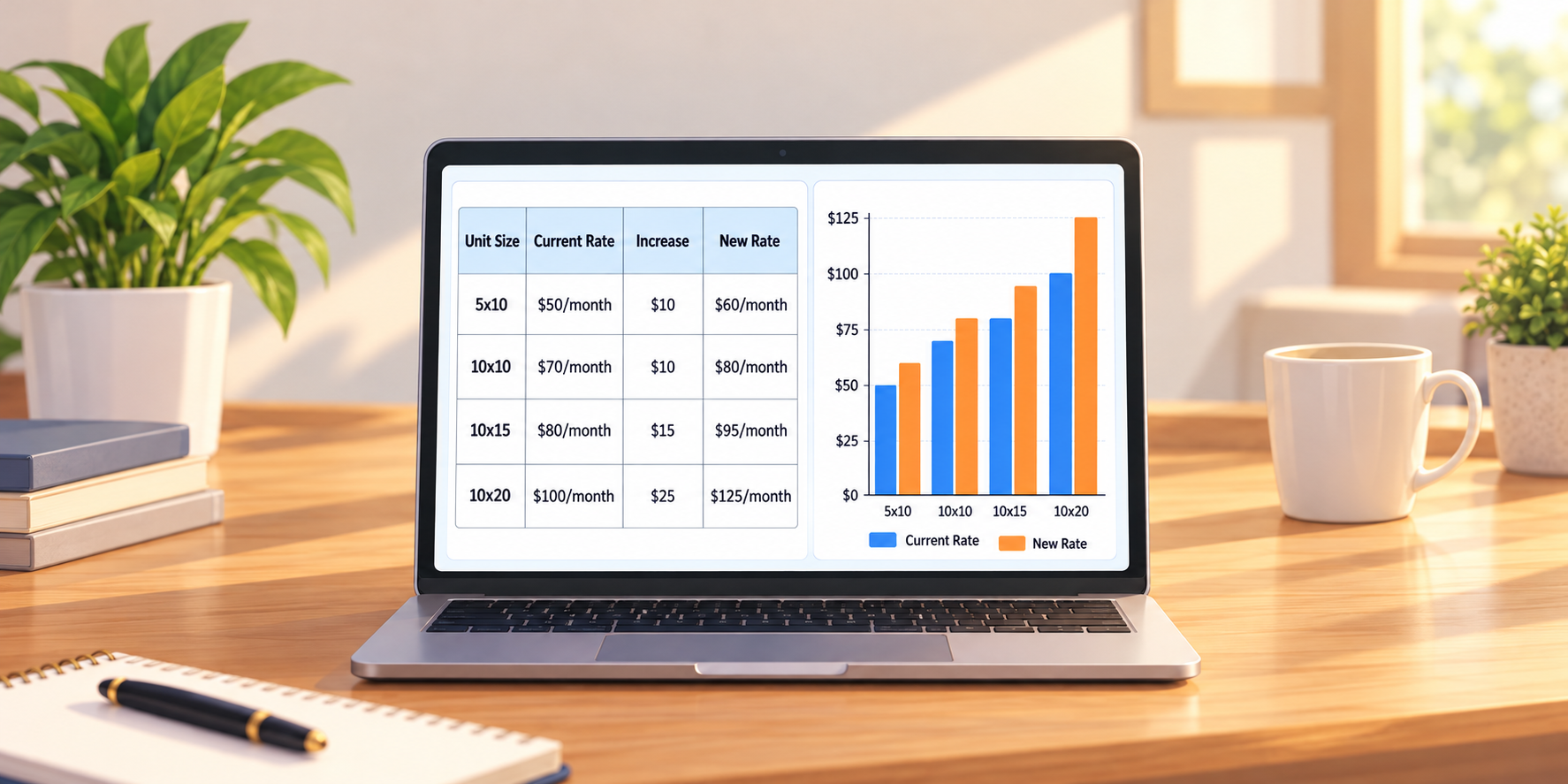
Look at occupancy by unit size rather than just your facility’s overall percentage. Your 10×10 units might be consistently full while your larger units sit vacant. That could support raising rates on one size while keeping others steady. Industry pricing guidance emphasizes reviewing demand and occupancy by unit type when evaluating rates.
A brief busy period is less useful than a pattern that holds over several months.
2. Your Rates Are Below Comparable Facilities
Review what nearby facilities charge for similar units. Make sure the comparison accounts for:
- Unit size and climate control
- Drive-up access and access hours
- Security features and property condition
- Location and convenience
- Promotional pricing versus regular monthly rent
A competitor’s introductory special may not reflect the price tenants pay after the promotion ends. Use comparable regular rates as a reference, and consider the value your own facility provides.
Being less expensive is not automatically a problem. However, a substantial pricing gap deserves a closer look.
3. Operating Costs Are Reducing Your Margin
Review expenses such as property taxes, insurance, maintenance, utilities, and payment processing. If costs have increased while rental income has stayed flat, your facility may be earning less even with steady occupancy.
Compare your recent revenue and expenses with previous periods. Ask whether current rents support routine operations, needed repairs, and a reasonable reserve for unexpected expenses.
Higher costs are a reason to review rates, but demand and competitive pricing should still help determine how much room you have to adjust.
4. Existing Tenant Rates Have Fallen Behind
Some long-term tenants may still be paying rates established years ago. Review their current rent, the date of their last increase, and what you now charge for comparable units.
Evaluate new-rental pricing and existing-tenant increases separately. They serve different purposes and may require different timing. Industry guidance recommends considering the gap between existing tenant rates and current rates, along with tenant history and the potential effect on retention.
Regular reviews can help you avoid allowing a large gap to build before addressing it.
5. You Can Support the Increase With a Good Rental Experience
Consider what tenants experience when they visit or contact your facility. Is the property clean? Do lights and gates work reliably? Are questions answered promptly? Is paying rent straightforward?
If there are unresolved maintenance issues or recurring service complaints, address them as part of your pricing plan. Tenants should continue to receive dependable service as their rent changes.
Improvements such as better lighting or easier online payments can strengthen the value you provide, although they do not guarantee that tenants will accept an increase.
When It May Be Better to Wait
Take a closer look before raising rates if:
- Vacancies are increasing and units are taking longer to rent.
- Prospective tenants frequently identify price as a concern.
- Nearby facilities have substantial availability at lower comparable rates.
- Tenants recently received an increase.
- Property or service problems remain unresolved.
These signs may call for a smaller adjustment, an increase limited to certain unit sizes, or more time to evaluate demand.
Make a Measured Change and Review the Results
There is no single increase percentage or schedule that fits every facility. Choose an adjustment supported by your numbers, and estimate how additional vacancies could affect the expected revenue gain.
For existing tenants, review your rental agreement and applicable requirements before setting the effective date and sending notices. Clearly communicate the new monthly rent, when it begins, and how tenants can contact you with questions.
Afterward, monitor revenue, occupancy, move-outs, and tenant feedback. Higher rates should improve the facility’s performance, not simply increase the price on paper.
Management software such as Unit Trac can help keep tenant records, payment information, and reporting organized so you can review your business with greater confidence. A consistent review process makes it easier to recognize when rates need attention and choose an adjustment that fits your facility.