
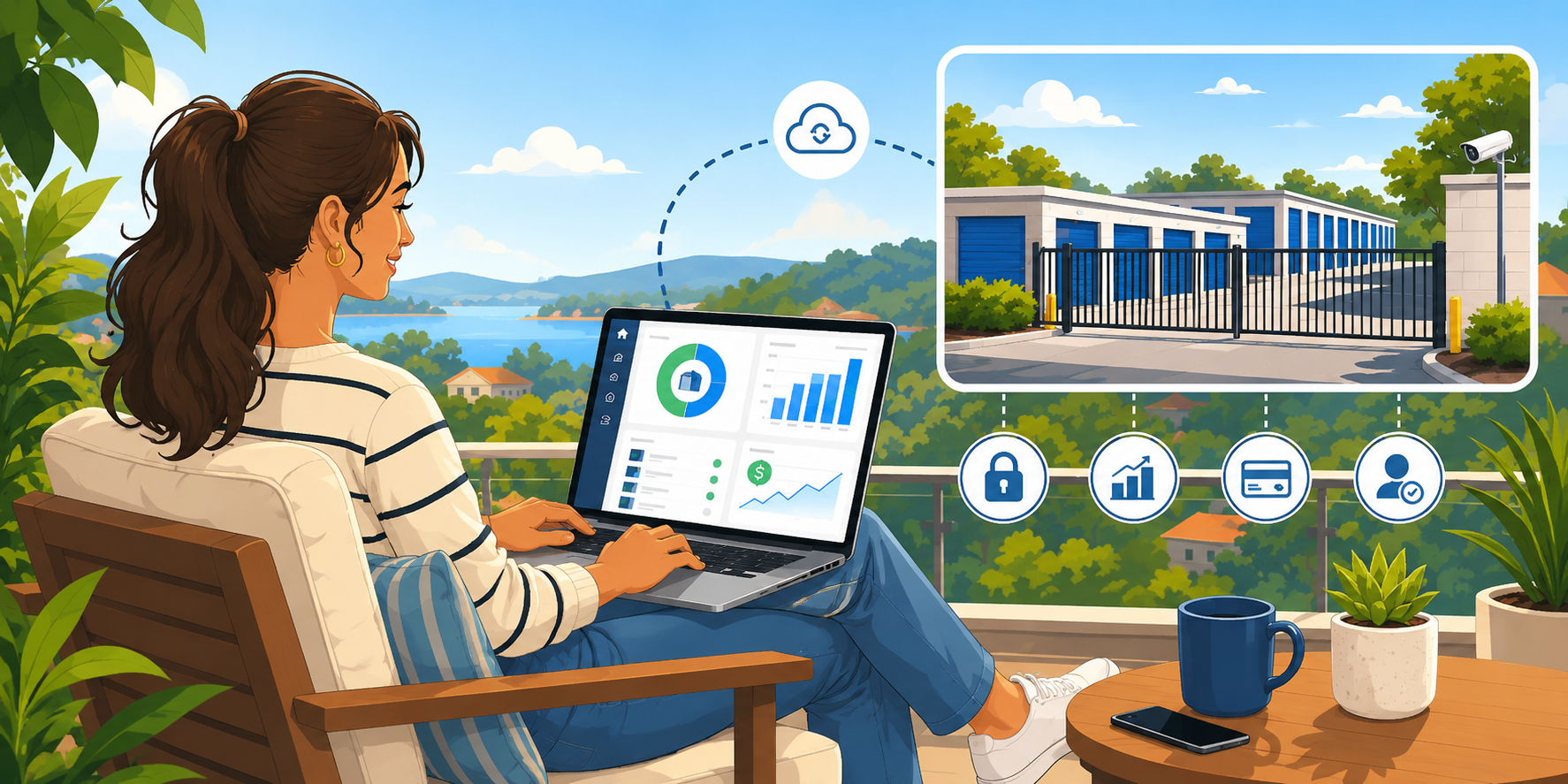
How to Manage a Self Storage Facility Remotely
Running a self storage facility no longer has to mean being on-site every day. With the right systems in place, owners can reduce routine tasks, manage more from anywhere, and still stay in control of the business.
Remote management does not mean ignoring your facility. It means using software, automation, and clear processes to make the business easier to operate with less day-to-day involvement.
Start With the Right Software
The foundation of remote management is a strong self storage management system. Your software should let you access tenant accounts, payments, unit availability, reports, and business activity whether you are at the facility or away from it.
A software platform with a mobile-friendly, intuitive user interface is key to making remote management as painless as possible.
For a hands-off owner, visibility is key. If you can quickly see what is happening with rentals, balances, occupancy, and revenue, you can make better decisions without needing to be physically present every day.
Offer Online Rentals
Online rentals are one of the easiest ways to reduce manual work. Instead of requiring every tenant to call or visit the office, customers can choose a unit size, provide their information, accept the rental agreement, and pay online.
This makes the process more convenient for tenants and helps owners capture rentals even when the office is closed.
Make Payments Easy
Payment collection can take a lot of time if it is handled manually. Offering online payments and encouraging autopay can reduce late payments, improve cash flow, and save time each month.
Convenient payment options may include:
- Credit and debit card payments
- ACH payments
- Online customer portal payments
- Recurring autopay
- Mobile-friendly payment options
The easier it is for tenants to pay, the easier it is to manage the business remotely.
Automate Communication
Routine communication can also be simplified. Automated messages can help keep tenants informed without requiring you to send every reminder manually.
Common automated messages include:
- Automatic Invoicing
- Past Due Reminders
- Move-in instructions
- Move-out confirmations
- Rent increase notices
- General facility updates
Consistent communication helps prevent confusion and reduces the chance that important tasks are missed.
Review Reports Regularly
Being hands-off does not mean being uninformed. Reports help you monitor the health of your business from anywhere.
Important reports to review include:
- Occupancy reports
- Delinquency reports
- Revenue reports
- Move-in and move-out reports
- Payment reports
These reports help you track trends, spot problems, and make informed decisions without reviewing every account manually.
Create Clear Processes
Remote management works best when your processes are simple and consistent. Move-ins, move-outs, payments, access instructions, and late payment follow-ups should all follow a clear routine.
When these steps are documented and repeatable, tenants get a smoother experience and owners spend less time stepping in to answer the same questions over and over.
Plan for On-Site Tasks
Even with remote systems, some tasks still need to happen at the facility. These may include cleaning units, checking locks, inspecting doors, handling maintenance, removing abandoned items, and meeting vendors.
The key is deciding who will handle those tasks and how often they need to be done. Some owners visit periodically, while others use part-time help or a local manager.
Keep the Tenant Experience Simple
A more hands-off business should still be easy for tenants to use. Make sure your website, rental process, payment options, and instructions are clear and mobile-friendly.
Remote management should make things easier for both the owner and the customer.
Final Thoughts
Managing a self storage facility remotely is about building better systems. With the right software, online rentals, easy payments, automation, and reporting, owners can reduce daily involvement while staying connected to the business.
Unit Trac helps self storage owners manage tenants, payments, units, reports, and day-to-day operations from one system, making it easier to run a facility whether you are on-site or away.