
How to Handle Lockouts at Your Self Storage Facility
When a tenant falls behind on rent, one of the first actions a self storage facility may consider is a lockout, often called an “overlock.” An overlock prevents the tenant from accessing the unit until the account is brought current. While this can be an effective way to encourage payment, it needs to be handled carefully, consistently, and in compliance with your rental agreement and local self storage laws.
Lockouts are not just an operational task. They are part of a larger delinquency process that may eventually involve lien notices, auctions, or account termination. Because rules vary by state, every facility should have a clear written policy and should review applicable self storage lien laws before taking action. Many states have specific rules around notices, timelines, lien enforcement, and sale procedures.
What Is an Overlock?
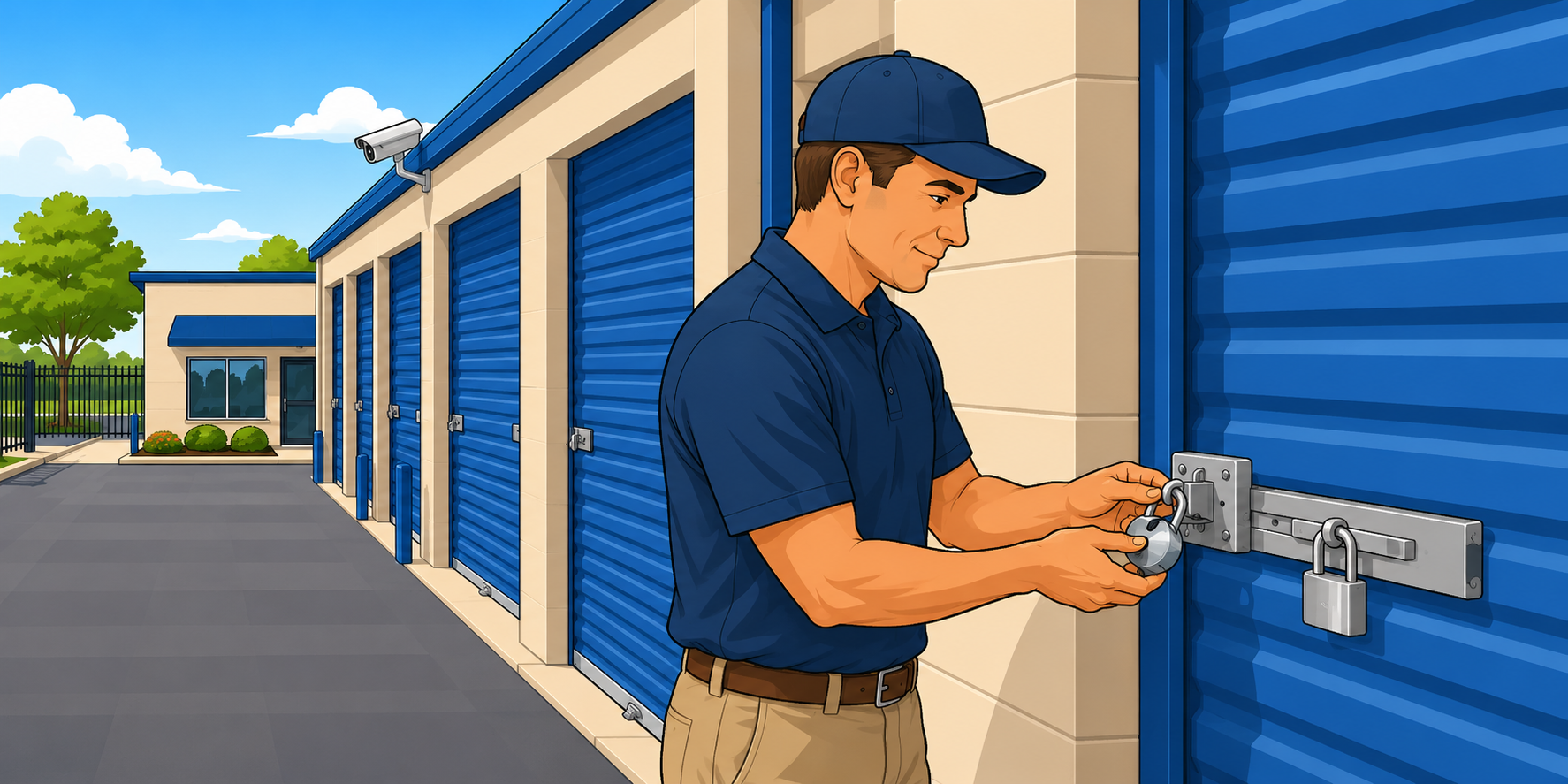
An overlock is an additional lock placed on a tenant’s storage unit by the facility. It does not remove the tenant’s lock or give the facility access to the tenant’s belongings. Instead, it temporarily blocks access to the unit until the tenant resolves the delinquent balance.
In most cases, an overlock is used after rent becomes past due and any grace period has expired. The goal is to protect the facility from continued unpaid use of the space while giving the tenant an opportunity to pay before the account moves further into the lien process.
How Long Should You Wait Before Overlocking?
There is no single timeline that applies to every facility. The right timing depends on your rental agreement, your state’s self storage laws, and your internal delinquency policy.
Many facilities apply a late fee after a short grace period, such as five to ten days after the due date, and then overlock the unit shortly after that. However, some states may set specific requirements before access can be denied, and others may tie lockouts to written notices or lien procedures. For example, state-specific self storage laws can require strict notice periods before property may be sold, and some laws also address when access may be restricted.
As a best practice, your lockout timeline should be:
- Consistent from tenant to tenant
- Clearly stated in your rental agreement
- Compliant with state and local law
- Documented in your management system
- Paired with tenant communication before and after the overlock
If you are unsure what timeline applies in your state, check your state’s Self-Service Storage Facility Act or consult a qualified attorney familiar with self storage operations.
Should You Notify the Tenant Before Overlocking?
In most cases, yes. Even when not strictly required before an overlock, notifying the tenant is a smart business practice. Clear communication can prevent confusion, reduce disputes, and give the tenant a chance to pay before access is restricted.
Written notices are especially important if the account may later move into lien enforcement or auction. Many state lien laws require formal written notice before a tenant’s property can be sold for nonpayment. Some states also allow electronic notices if the rental agreement properly authorizes them.
Follow Your Rental Agreement
Your rental agreement should clearly explain what happens when a tenant does not pay on time. This includes when late fees apply, when access may be denied, how notices will be sent, and what steps may follow if the balance remains unpaid.
A strong rental agreement should address:
- Rent due dates
- Grace periods
- Late fees
- Overlock timing
- Notice methods
- Lien rights
- Auction procedures
- Tenant contact information requirements
The agreement should also make it clear that tenants are responsible for keeping their mailing address, phone number, and email address up to date. This helps ensure that notices are sent to the correct location and reduces the risk of a tenant claiming they were not informed.
Document Every Step
Good documentation is one of the best ways to protect your facility. Every action related to a delinquent account should be recorded.
Using self storage management software can make this process much easier by keeping account history, notes, payment records, and communication logs in one place.
Do Not Cut or Remove the Tenant’s Lock Too Early
An overlock is different from cutting a tenant’s lock. In most cases, the facility should not remove the tenant’s lock or access the contents of the unit unless it has reached the proper stage in the legal lien or auction process.
Cutting a lock too early can create serious liability. Even if the tenant owes money, their belongings are still protected by law until the facility follows the required legal steps. Always make sure your process matches your state’s requirements before entering a unit or preparing it for sale.
Be Consistent, but Use Good Judgment
Consistency is important. Tenants should be treated fairly, and your team should follow the same process for every delinquent account. Making exceptions too often can create confusion and weaken your policies.
At the same time, good communication can help avoid unnecessary escalation. A tenant who is only a few days late and responding to messages may be different from a tenant who is several weeks overdue and unreachable. Your written policy should give your team a clear framework while still allowing reasonable judgment within legal limits.
Review Local Regulations Regularly
Self storage laws can change, and they vary widely by state. Some states have specific notice timelines, approved delivery methods, advertising requirements, and redemption periods before a lien sale can occur. Because of this, facility owners should review their state’s current laws regularly and update their rental agreements and procedures as needed.
If your facility operates in more than one state, do not assume the same delinquency process applies everywhere. Each location should follow the rules for its own jurisdiction.
Final Thoughts
Overlocking overdue tenants is a common part of self storage operations, but it should never be handled casually. A good lockout process protects the business, encourages timely payment, and keeps the facility on the right side of the law.
The best approach is simple: have a clear rental agreement, communicate early, document every step, and follow your local regulations carefully. When in doubt, check your state’s self storage lien laws or speak with a legal professional before taking the next step.