
Revenue Management Basics for Self Storage Owners
Revenue management is the practice of using data, demand, and pricing strategy to improve income from the units you already have. For self storage owners, it is not just about raising rates. It is about understanding when to adjust prices, which unit sizes are in demand, and how to balance occupancy with long-term profitability.
A strong revenue management strategy helps facility owners make better decisions instead of relying on guesswork.
Start With Occupancy by Unit Size
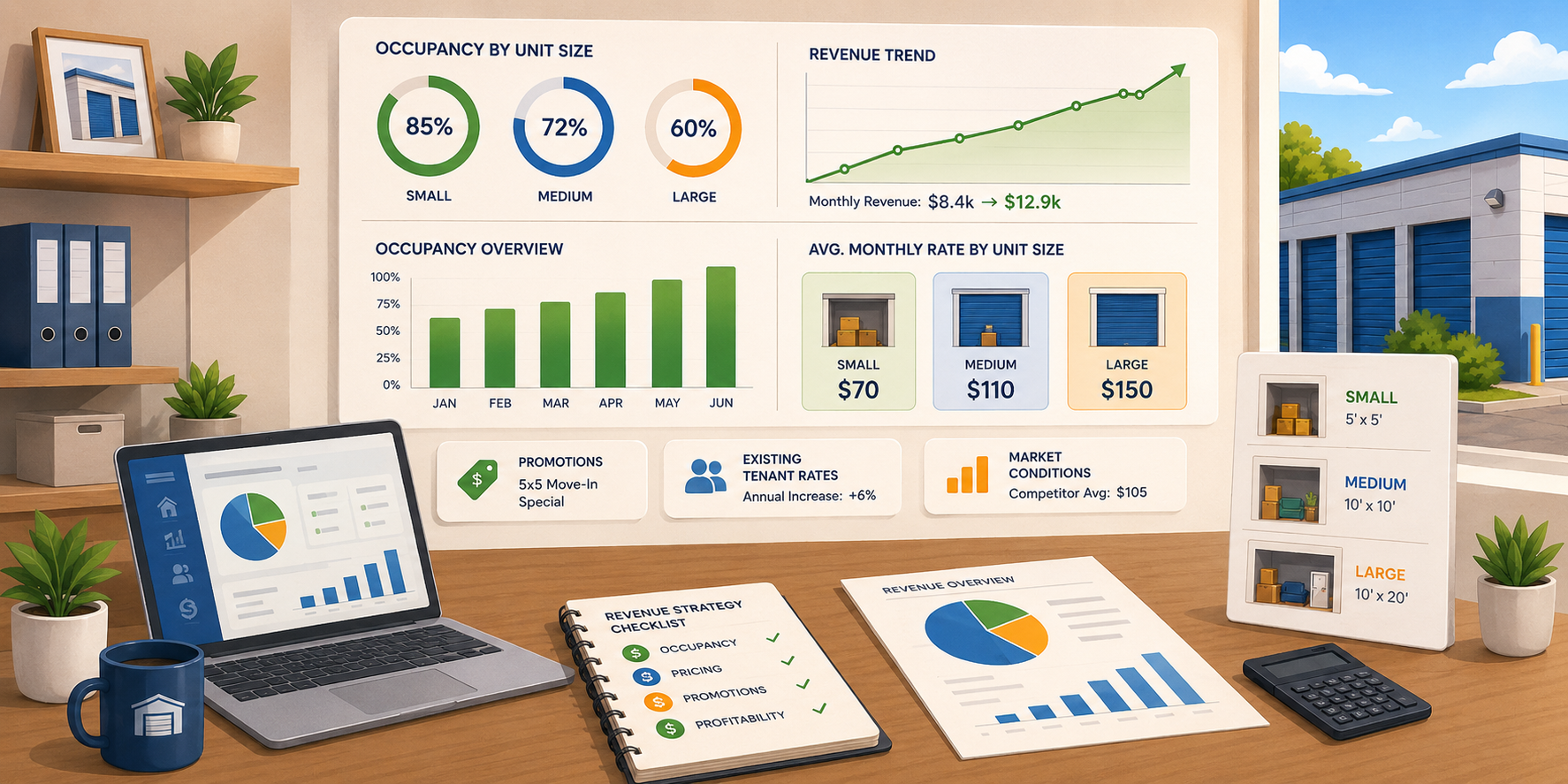
Overall occupancy is important, but it does not tell the whole story. A facility may be 85% occupied overall, while certain unit sizes are nearly full and others have several vacancies.
For example, if your 10x10 units are consistently close to full, that may be a sign that demand is strong enough to support a rate increase. If your larger units are sitting empty, you may need to adjust pricing, improve visibility, or offer a targeted move-in special.
Looking at occupancy by unit size gives you a clearer picture of where your pricing may need attention.
Understand the Difference Between Occupancy and Revenue
High occupancy does not always mean your facility is performing as well as it could. A facility that is nearly full but priced too low may be leaving money on the table.
On the other hand, rates that are too high may slow rentals and increase vacancies.
Good revenue management finds the balance between keeping units rented and making sure those units are producing the right amount of income. Sometimes that means raising rates. Other times it means adjusting discounts, improving marketing, or focusing on slower-moving unit sizes.
Use Promotions With a Purpose
Move-in specials and discounts can be useful tools, but they should have a clear goal. A promotion may help fill vacant units, increase rentals during a slower season, or draw attention to a specific unit size.
However, discounts should not become your default pricing strategy. Offering promotions too often can train customers to expect a deal and may reduce the perceived value of your facility.
The best promotions are targeted, limited, and easy to measure.
Review Existing Tenant Rates
Revenue management should not only focus on new rentals. Existing tenant rates should also be reviewed over time.
Gradual rent increases can help your facility keep up with rising expenses, market conditions, and property improvements. The key is to make increases reasonable and consistent. Sudden or excessive increases may frustrate good tenants and lead to unnecessary move-outs.
A thoughtful approach helps protect revenue while maintaining tenant satisfaction.
Watch Market Conditions
Competitor pricing is worth monitoring, but it should not be the only factor in your decisions. Your facility may offer features that justify higher rates, such as convenient access hours, strong security, online rentals, autopay, a clean property, climate-controlled units, or helpful customer service.
If your facility provides a better experience, your pricing should reflect that value.
Market demand can also shift throughout the year. Moving season, college schedules, local development, weather events, and economic conditions may all affect storage demand in your area.
Use Software to Track Trends
Self storage software can make revenue management easier by helping owners track occupancy, rentals, move-outs, payment activity, tenant rates, and unit availability. Instead of manually reviewing spreadsheets or making decisions from memory, owners can use reports to identify patterns and take action.
Self storage software can make revenue management easier by helping owners track occupancy, rentals, move-outs, payment activity, tenant rates, and unit availability. Instead of manually reviewing spreadsheets or making decisions from memory, owners can use reports to identify patterns and take action.
For multi-facility operators, software can also make it easier to compare performance across locations and spot opportunities by market, unit size, or occupancy level.
Final Thoughts
Revenue management does not have to be complicated. Start by reviewing occupancy by unit size, monitoring street rates, using promotions carefully, and adjusting tenant rates in a thoughtful way.
With the right information and a consistent review process, self storage owners can make smarter pricing decisions, improve facility performance, and increase revenue from the units they already have.